
Penulis:
A. Rahman Rahim, Arifuddin, M. Agus, Akhmad Haryono, Bambang Wibisono, Akhmad Sofyan, Erna Cahyawati, Ali Imron Al-Ma’ruf, Anas Ahmadi, Andi Sukri Syamsuri, Ariesa Pandanwangi, Bani Sudardi, Darmoko, Diah Ariani Arimbi, Djoko Saryono, Esti Ismawati, Kun Andyan Anindita, Farida Nugrahani, Faruk, Hanif Nurcholis, I Made Suyasa, I Nyoman Darma Putra, I Nyoman Suaka, Isah Cahyani, Halimah, Suci Sundusiah, Siti Arina Hasanah, Juanda, Kundharu Saddhono, Maman Suryaman, Mohd. Harun, Nurrahmah, Muhammad Rohmadi, Muliadi, Kasma F.Amin, Sitti Rahmawati, Mundi Rahayu, Novi Anoegrajekti, Nurhayati Syair, Wati Istanti, Magdalena Baga, Endah Imawati, Nugraheni Eko Wardani, Nurhayati, Fikri, Raka Gunaika, Muhammad Zakiul Fikri, Pratiwi Retnaningdyah, Pujiharto, R. Kunjana Rahardi, Razali, Lina Sundana, Rosida Tiurma Manurung, Rusma Noortyani, Aulia Novitasari, Adhwa Ramadhina, Sahid Teguh Widodo, Sarwit Sarwono, Didi Yulistio, Andriadi, Silvia Rosa, Sri Harti Widyastuti, Sri Rochana Widyastutieningrum, Sugiarti, Suminto A. Sayuti, Surastina, Effrina Yuricki, Suroso, Wan Syaifuddin, Wigati Yektiningtyas, Desca Angelianawati, Ina V. Samosir Lefaan, Adelce Ferdinandus, Yulia Nasrul Latifi, Yulianeta, Yundi Fitrah, Yusro Edy Nugroho
Sinopsis:
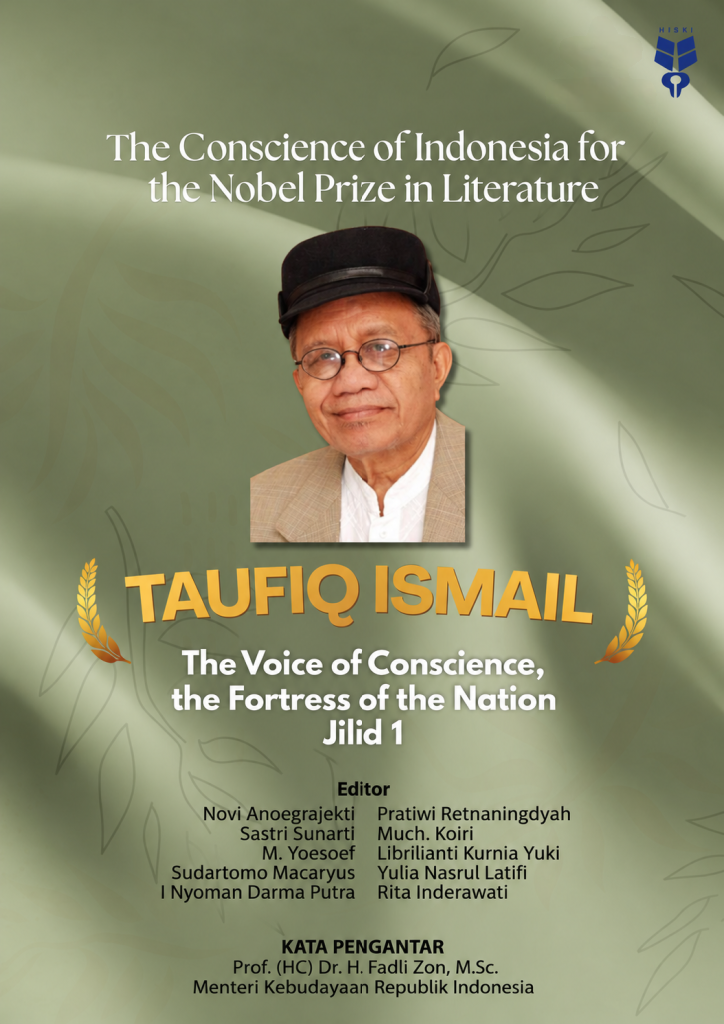
The book “Taufiq Ismail: Suara Nurani Benteng Bangsa”, is a collaborative work by Indonesian professors, doctors and masters’ degree holders working at universities and/or research institutions from Aceh to Papua. He utilizes poetry, with its strict aesthetic principles, to chronicle various historical events, humanitarian tragedies, values of faith and the spirit of struggle. The colonial and the Independence era where he lived through served as a source of inspiration for his work. Many of his works have been translated into more than a dozen languages worldwide. This stands as a testament to the integrity, honesty and greatness of his poetic works. Literature is, after all, not a history book, which tends to prioritize cognitive aspects. It has the potential to convey historical events by prioritising the affective dimension, presented through aesthetic principles. A variety of studies, drawing on diverse theoretical perspectives and methodologies, are presented in this book, which invites readers to explore the power, beauty and influence of Taufiq Ismail in the history of Indonesian literature.
